
When Should Your Child See a Pediatric Food Allergist?
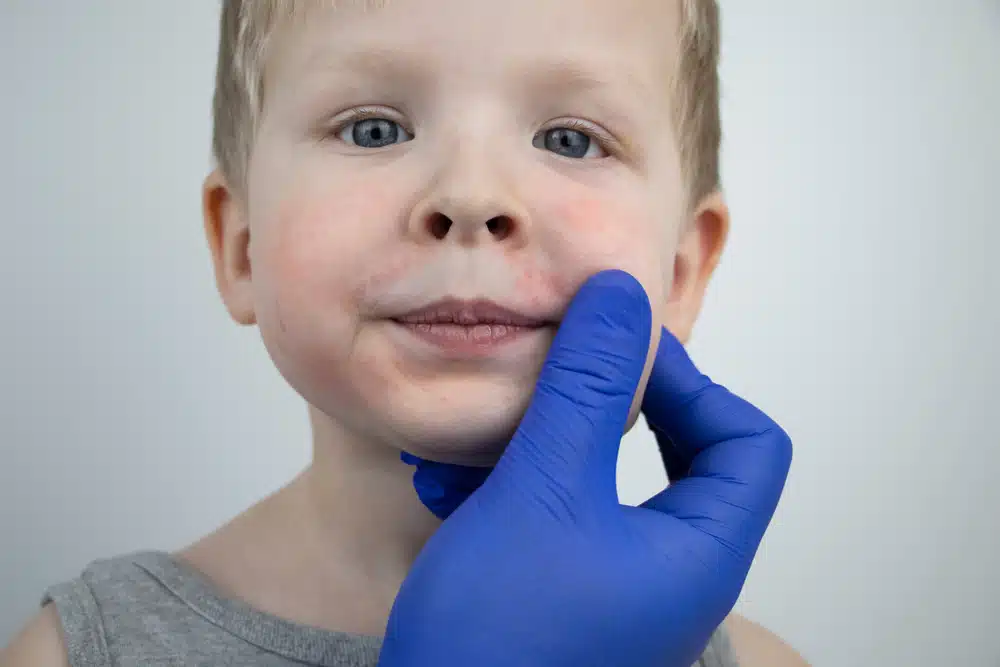
A pediatric food allergist is a board-certified allergy specialist who diagnoses, treats and manages food allergies in children. Parents will turn to a pediatric allergist when they suspect a food like peanuts, eggs or milk is triggering their child’s symptoms. Pediatric food allergists help families with every stage of food allergy management, from the initial testing to long-term treatment planning. But how do you know when it’s time to schedule a visit with a North Texas pediatric allergist?
In general, it is recommended that your child see a pediatric food allergist if they have experienced a suspected adverse reaction to food, or experienced recurrent symptoms following consumption of a food. They should also visit a pediatric food allergist if they need to avoid several foods due to a suspected food allergy, or have had a positive food allergy test that requires interpretation, or have a known food allergy that is affecting daily life activities.
Led by board-certified allergist Dr. Mireku, the team at Safe2Bite | Texas Food Allergy Center provides family-focused food allergy care for children of all ages across the DFW area. As a mom of children with food allergies herself, Dr. Mireku understands how stressful it can feel for parents when a child reacts to a food, and no one is really sure what’s causing it.
In this article you will learn the specific signs, scenarios and age-related milestones that should prompt you to visit a pediatric food allergist, and what to expect from the visit.
Signs Your Child Should Visit a Pediatric Allergist
Reactions to a food can range from mild to severe, yet these responses are not always caused by an actual food allergy. Here are some of the signs and situations that suggest it’s time to see a pediatric allergist to find out what’s going on.
Your Child Has Had a Serious Reaction After Eating
Food allergies can trigger serious reactions in children including throat tightness, trouble breathing, and a drop in blood pressure. In cases of anaphylaxis it’s important to use your epinephrine auto-injector and then seek emergency medical attention. Once the emergency has passed you should make an appointment with a pediatric food allergist. The allergist will confirm the symptom trigger and discuss food allergy treatment options and emergency preparedness, which will include being prescribed epinephrine.
Your Child Has Symptoms After Eating a Particular Food
Children can experience a range of symptoms within minutes to a few hours of eating. Symptoms can include one or more of the following common responses.
- Hives, itching or redness.
- Swelling of the lips, face, tongue or throat.
- Tingling or itching in the mouth.
- Stomach pain, nausea, vomiting or diarrhea.
- Coughing, wheezing or difficulty breathing.
- Dizziness, weakness or fainting.
Make a note of the symptoms your child has experienced and the foods that were eaten. Your pediatric allergist will look at symptom history along with the results of food allergy testing to build a complete picture.
Your Child Has Repeated Reactions Without an Identifiable Cause
Pinpointing a specific food won’t always be easy, particularly when the reaction appears after eating restaurant meals containing many ingredients or packaged foods. In response, allergists can narrow down the potential allergens involved by testing for a series of possible causes. Getting an accurate diagnosis allows you to find out whether your child could benefit from oral immunotherapy (OIT) or other treatment options.
Your Child Is Avoiding Multiple Foods Without a Confirmed Diagnosis
After an unexplained reaction, parents may quickly remove several foods from a child’s diet. And while this may be an important preventive step immediately following a reaction, eliminating foods without a diagnosis also makes it harder to get the proper nutrition. For example, restricting eggs and milk can affect a child’s sources of protein, calories, vitamins and minerals.
According to the American Academy of Allergy, Asthma & Immunology, unnecessary avoidance of some foods without a reliable diagnosis may result in a potentially dangerous reaction upon reintroduction of these foods into the diet. Working with a pediatric allergy specialist can help you identify your child’s actual triggers and safely reintroduce foods that he or she may not need to avoid.
Your Child’s Food Allergy Plan Is Not Working
Some children will already have a diagnosis, though they continue to experience reactions. Reviewing the food allergy treatment plan can help identify whether families are managing the allergy appropriately or whether changes are needed, such as using allergy drops or starting oral immunotherapy.
Your Child May Have Outgrown a Food Allergy
Some food allergies that develop during childhood may resolve with time. If there are no new symptoms of food allergies over time, or if previous food testing suggests that the condition is in flux, regular visits to an allergist to conduct further tests or food challenges may be necessary. When you do suspect that a child has outgrown their allergy, resist the impulse to test for this at home and contact your pediatric food allergist instead.
Food Allergies Interfere With School or Daily Activities
The fear of accidental allergen exposure can prevent children from eating a healthy diet, attending parties, and even feeling calm at school. When a food allergy is having a negative effect on a child’s daily life, a pediatric allergist works with families to find solutions. Food allergy testing may be required to confirm the trigger food, while an epinephrine prescription can give peace of mind in case of an emergency situation.
Food allergies don’t just affect the body, they also affect the confidence level, social interactions, and emotional well-being of a child. With the help of a pediatric allergist you can help restore normalcy and reduce daily stress for both you and your child.
Age-by-Age Guide to Seeing a Pediatric Food Allergy Specialist
Food allergy varies based on the developmental age of the individual. The appropriate time to refer a patient to a specialist is often dictated by their developmental age and risk profile at that time.
Infants (0 to 12 Months)
Since babies cannot communicate their feelings verbally, food allergies become difficult to identify. The symptoms of food allergies in babies could be excessive crying, eye rubbing, arching of the back, tongue-thrusting, or reduced muscle tone following feedings. When the clinical history suggests an allergic reaction, at Safe2Bite we actually start testing your baby at 6 months.
If you are seeing any of these symptoms, then you’ll want to make an appointment with a food allergy specialist for your infant.
- Severe or persistent eczema that hasn’t cleared up even with topical treatment.
- Severe or persistent eczema that elimination seems to indicate springs from an allergic reaction to one of the top 9 allergens (milk, egg, peanut, tree nuts, wheat, soy, fish, shellfish, sesame).
- Blood or mucus in their stools, and you can’t explain it.
When a baby’s food allergy is identified early-on, the allergist can guide your family in the safe introduction of the food, which can potentially lessen the severity of an allergy. Safe2Bite also offers immunotherapy treatments that may eliminate the allergy altogether.
Toddlers and Preschoolers (1 to 5 Years)
This is the stage when food allergies are most likely to be identified in children as they start diversifying their diet. Accidental exposure may also occur at daycare, a birthday party or a playdate. When you suspect that your toddler has developed a reaction, and are not sure about the cause, that’s enough reason to see a specialist.
Consult an expert if your toddler or pre-schooler shows these signs.
- Reacts more than once to a specific food item, no matter how mild the reaction was.
- Has been avoiding a particular food out of fear without ever being formally tested – Dr. Mireku says your child might be protecting themselves. With keen senses, at times just the smell of the allergic food can cause a child to feel “off” and then avoid the food.
- Has more than one suspected food trigger.
School-Age Children (6 to 12 Years)
The emotional component of dealing with food allergies becomes more important during this period. School lunchtime, birthday parties and snacks during the day can become opportunities for trigger events. At this age, an appointment with a specialist is needed not only for clinical purposes, but also for developing your child’s understanding of their condition. Dr. Mireku loves to empower the kiddos at this age, and at Safe2Bite we educate them about the signs and symptoms of their allergic reaction and how to use their epinephrine auto-injector.
It’s time to see a specialist if your school-age child has these concerns.
- Suffers from an allergy but has not been re-evaluated by a food allergy doctor within a year. (Some childhood allergies, especially those to milk, egg, wheat and soy can be outgrown.)
- Suffers from asthma along with food allergy, since the combination of these two conditions increases the chance of having a severe allergic reaction.
- Has experienced an allergic reaction at school and does not have an anaphylaxis action plan.
- Suffers from several food allergies and is frustrated because of their food limitations.
Teenagers
Adolescents represent a special risk category. Studies reveal that teenagers tend to take bigger risks with their allergies, and they’re less likely to have an epinephrine auto-injector with them. They are also at higher risk of having a fatal or near fatal anaphylactic reaction when compared with younger patients.
A consultation with a specialist is essential for teens in these situations.
- Have just become independent and can make their own food choices.
- Have not consulted an allergist since they were a child, and require updated testing.
- Wondering if they’ve “outgrown” their allergy. (Always assess this with a medically supervised oral food challenge, not a self-experiment at home.)
- About to go to college and need a comprehensive plan and protective treatment, such as food sublingual immunotherapy.
The teenage years are not the time to let allergy follow-up lapse. In fact, this period of a child’s life is one of the most critical times to actively engage a specialist.
What to Expect at Your Child’s First Food Allergy Appointment
Having knowledge of what occurs during the appointment can help alleviate anticipatory stress concerning the procedure. In order to make the most of your appointment, make sure that you have completely filled out any required paperwork prior to the appointment, and upload previous skin test results and lab work for your allergist to review beforehand. Below is a guide on what to expect from a first appointment.
Review of Medical History
Your allergist will closely study the history of your child’s reactions. Make sure to bring the following items to the appointment.
- A timeline of the child’s reactions along with the foods consumed, amount eaten, and when symptoms developed.
- Photographs of your child’s visible symptoms like rashes and swelling (if available).
- Any previous test results for allergies (skin or blood tests).
- A list of foods which your child avoids, and the reason why.
- Allergic medical history of your child (e.g., eczema, asthma, seasonal allergies).
- List of current medications.
The more detailed the history, the more helpful the appointment will be.
Diagnostic Testing
An important thing to remember here is that if your child is on antihistamine medication such as Zyrtec, Claritin, Benadryl, Allegra or Xyzal, they need to discontinue use 5 days prior to the appointment if possible, as directed by the allergist team. This would allow the allergist to do skin testing, which may be clinically necessary.
The allergist would consider using one or more of the following depending upon your child’s history.
| Test | What It Involves | Suitable For |
|---|---|---|
| Skin prick test | Small allergen extract placed on the skin, results in 15–20 minutes. | Quick, broad screening. |
| Specific IgE blood test | Measures allergen-specific antibodies. | In cases where skin testing is not possible. |
| Component testing | Advanced blood test to identify specific proteins. | Predicting reaction severity. |
| Oral food challenge | A child eats incremental amounts under medical supervision. | “Gold standard” for confirming or ruling out a food allergy. |
Building Your Child’s Food Allergy Plan
After the evaluation of the patient’s medical history, skin testing and laboratory results, your allergist usually draws one of the following conclusions.
- The child has likely outgrown the allergy or received a confusing test result, both of which would lead to conducting an oral food challenge test to determine if the child can now tolerate the food. This is the gold standard test to know for sure.
- The child is suffering from an allergy, and the doctor would present the options of treatment (oral immunotherapy (OIT), sublingual immunotherapy (SLIT), or a combined SLIT-to-OIT bridge).
By the end of your appointment, you should receive a comprehensive plan that includes the following.
- Allergens your child should avoid as part of the safety plan.
- Foods your child can eat despite a positive test.
- An anaphylaxis management plan (what to do if a reaction occurs).
- Prescription for epinephrine if needed.
- Follow-up schedule.
- Treatment options, including oral immunotherapy, sublingual immunotherapy or a bridging approach, if appropriate for your child.
The goal isn’t simply to identify what foods must be avoided. It’s to understand your child’s allergies, avoid needless restrictions and evaluate all treatment options to enable your child to live as full and unrestricted a life as possible. A Life of Food Freedom!
Visit a Pediatric Allergist for Food Allergy Treatment in DFW
Safe2Bite provides pediatric food allergy testing and treatment for families in North Texas at our locations in Frisco, McKinney and Southlake. We help children find relief from their symptoms and provide treatment plans that go beyond avoiding certain foods.
When searching for a pediatric food allergy expert in DFW, consider looking for a practice with experienced medical professionals who manage and treat food allergies in children, a dedicated staff that will be available to answer all your questions, and a clinic that is devoted only to food allergies. If you’re in the DFW area, you don’t need to look far.
Are you seeking solutions or interested in finding out more about treatments such as OIT therapy, SLIT, and SLIT-to-OIT? The Safe2Bite team will be happy to assist you in taking the next step with confidence.
For expert pediatric food allergy care, call (469) 916-5504 or request an appointment.
